Who’s in charge of a decentralized camp?
In July 2026, our friends at Artizen, a crowdfunding platform that backs projects at the meeting point of art, sci-tech and culture, invited us to join them at DWeb Camp near Berlin. We spent almost a week camping, sharing ideas, ideals and meals, brainstorming and dancing with a diverse group of dreamers, hackers and techno revolutionaries.
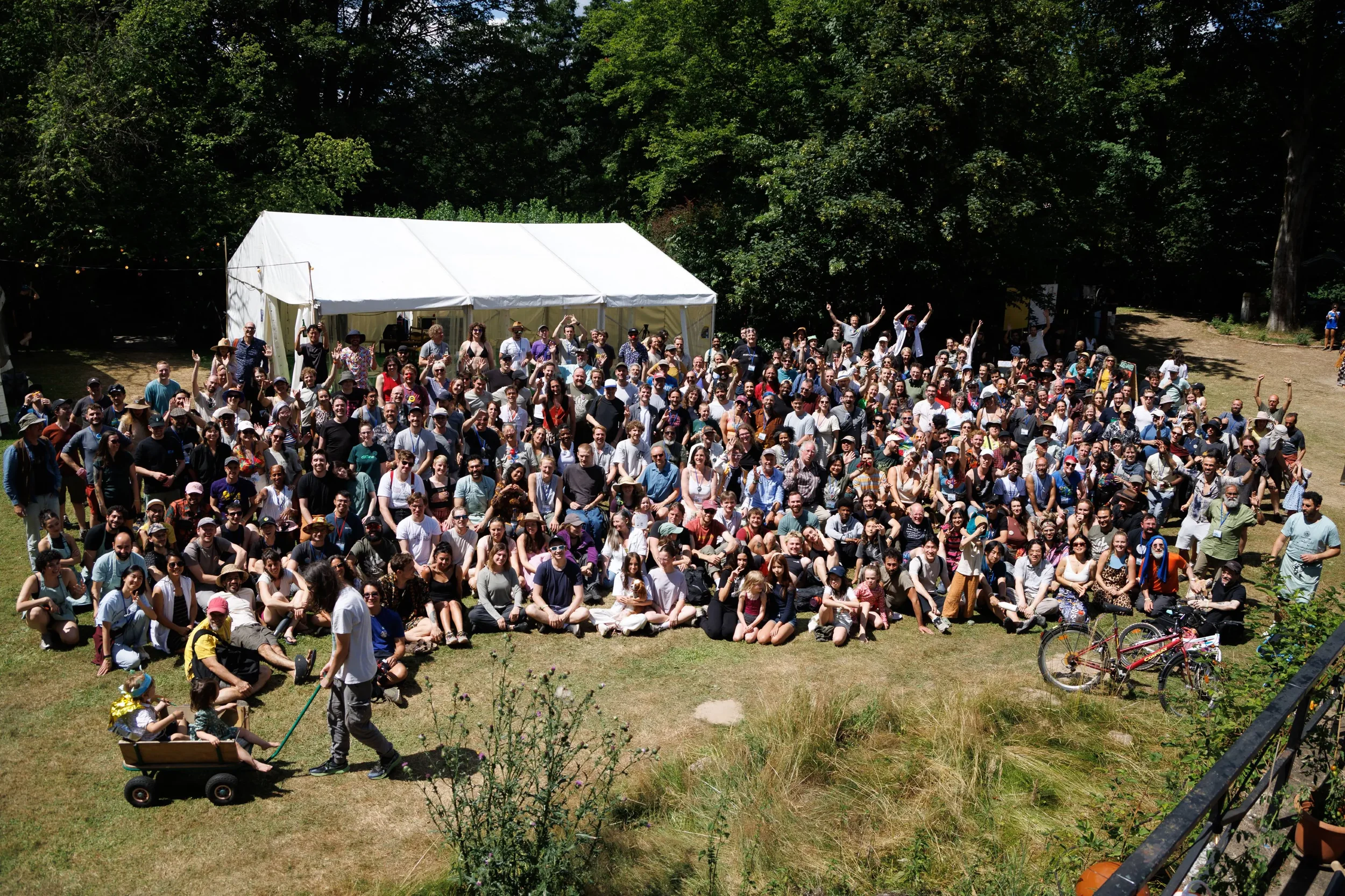
Prior to this, I was not really aware of DWeb’s work. Short for “Decentralized Web”, DWeb’s mission is to build a web that we the people own and shape together, rather than one controlled by a few billionaires companies, governments or algorithms. It grew out of the Internet Archive, an effort to document the history of the internet. The first DWeb camp was in 2019, in a forest near San Francisco and they stuck to that setting for 6 years. This year, in a different political climate, they hosted it outside the USA, which meant fewer immigration barriers and less threat of censorship, counting on more people being able and willing to take part. Around 750 people from around the world descended on Alte Hölle, for a gathering co-hosted by Berlin's Department of Decentralization.
It was inspiring and informative and also pretty intriguing for all the contradictions I encountered there.
Then vs. now
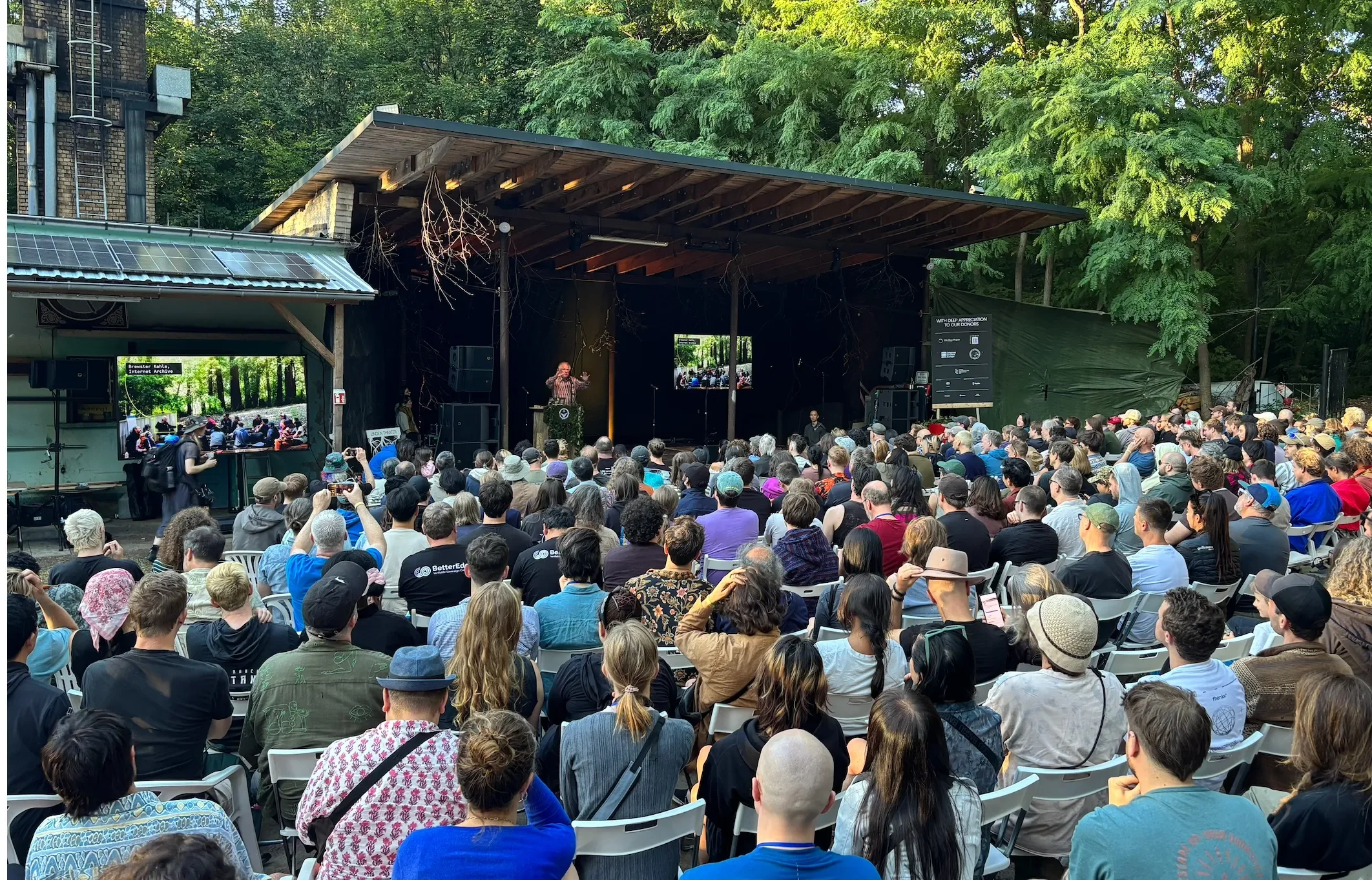
First, the venue. Alte Hölle was a Stasi (East German Secret Service) recreation site in the past. This is where one of history’s most infamous surveillance states used to come to chill out. Now it’s run by a diverse, free-spirited ensemble of friends, walking around barefoot, hosting a gathering of anti-surveillance activists fighting for a web beyond central control. The contrast was striking. It made me feel hopeful. If a place like this can change hands, maybe the web can too?
Open vs. approachable:
Everyone needs wifi, even in a forest. Just no Instagram please. Enter Freifunk wifi. The name means "free radio" in German. It's a community wireless network that aims to be decentralized, owned by the people who run it. To get a bit nerdy about how it works, basically any wifi router can become an access point that talks directly to other routers, forming a mesh network. For me, as a camper in a forest, it just worked.
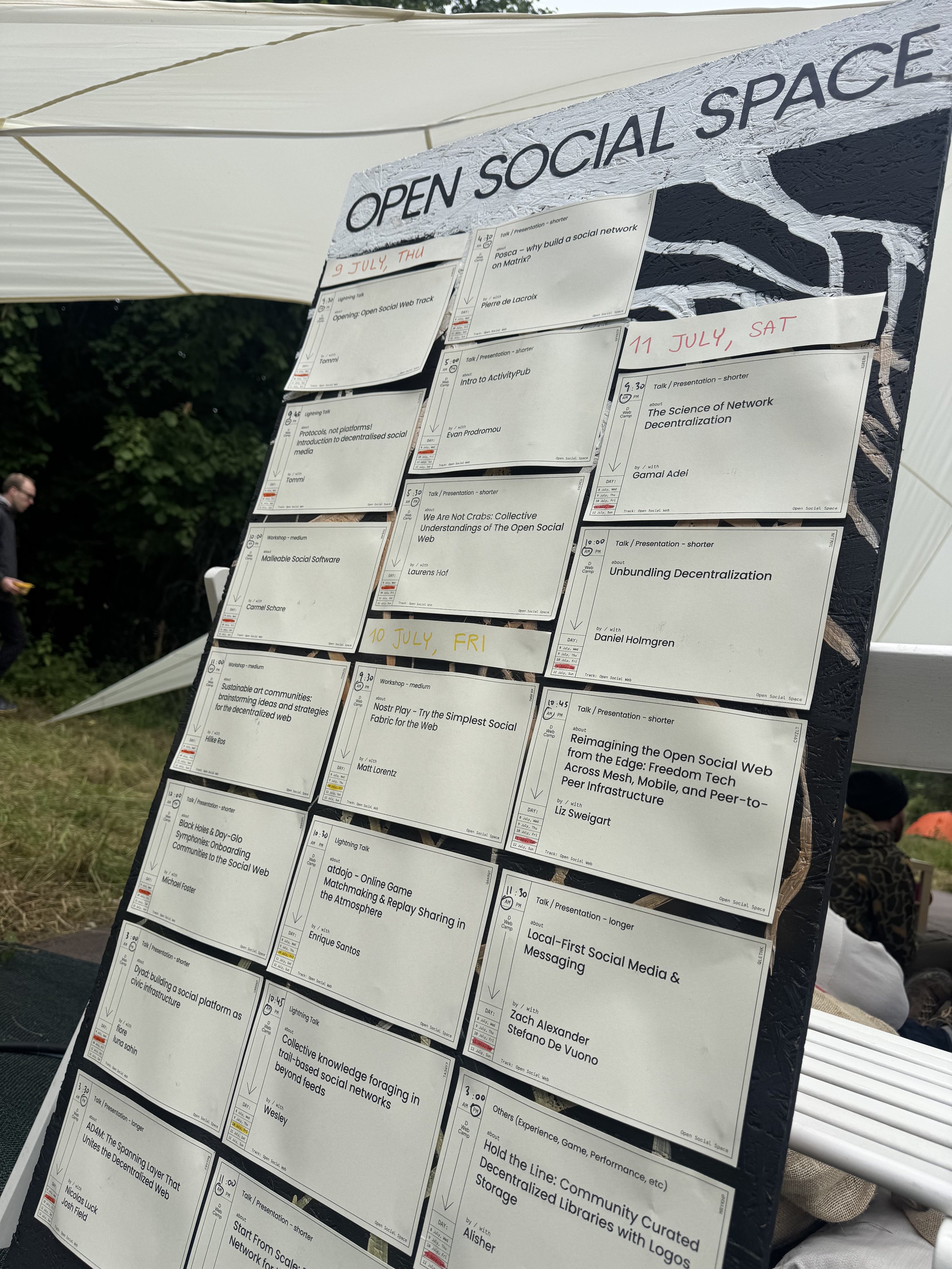
The Open Social Media track of the camp is where I spent most of my time as we, at United Humans, have been looking at tools that don't manipulate our view of the world by algorithms. Argh the algorithms…
We have been looking into Matrix (an open network for secure decentralized communication) as our messaging platform for United Humans (Thanks René!) At camp we got to meet some of the people behind Matrix and talk about the challenges, what they've learned, and what's next. Their own take: it tried to do too many things, and it was too geeky to begin with. It was built for geeks by geeks. That matched my experience, especially the lack of Ui/Ux love. The technology is there. The usability is catching up.
The founder also told us how Matrix got into the French government. Slowly and without forcing anyone. It launched like a counterculture option: “you don’t have to be on it, but some of us are” Like join the cool kids who are hip and are on the cutting edge. Their comparison was WhatsApp, which they said grew the same way: cool but not mandatory, until curiosity turned into adoption.
That got me rethinking my own assumptions. I used to think a tool that doesn't reach mass adoption isn't viable. Now I ask myself these questions: who is actually there? Who are the users? Passive followers vs. active participants? Maybe it matters less how many people show up at the start than why they’re there. Join me in pondering.
No one in charge vs. someone responsible
While dancing in Alte Hoelle’s converted barn one night, I was admiring the bass when someone unplugged everything. Noise complaints, and the German police at the door. Hard truth: even a decentralized camp answers to local authorities.
Where do you draw the line between no one in charge and someone being accountable for hundreds of people? Attendees needed to be fed, the toilets needed cleaning. Without organization, those things don’t spontaneously happen.
So does having organizers mean the camp was centralized?
The Unconference sessions are why I found DWeb's approach to co-creating and collective problem solving so smart. An Unconference session is a participant-led, open-space discussion or workshop. Instead of anything pre-planned, attendees pitch and run the topics themselves on the spot. It was fun to watch it come to life. The organizers set the stage, everyone else shaped what happened on it.
And one of these sessions: "Do you think DWeb camp is centralized?" Touché.
Big vs. small
"What Would You Tell the Pope About AI?" That was the question Daniel Erasmus, the person behind ClimateGPT (an open-source AI model focused on climate), posed during an informal conversation. He had been invited as a delegate to join other AI experts in discussions at the Vatican about the future of AI. What hopes, concerns and ideas would you bring? It's a big, ginormous question with so many implications. Where do you even start?
While some were discussing what to tell the Pope, a few of us were gathered in a circle to help one person with a different problem in their hometown. One small group, one real problem asked plainly. It was a local issue brought to five or six people who weren't familiar with the situation. We asked questions, debated solutions and ran scenarios. I can't share what we discussed, because it wasn't mine to share, but in the end, we agreed on a suggestion that seemed like a good first step. It was invigorating to be able to collectively problem solve with all our diverse backgrounds and experiences.
I don't know what the Pope heard in the end. I do know what five or six people did with one person's problem. That’s the kind of thing we want to do at United Humans.
So, who’s in charge of a decentralized camp?
Someone has to be. The trick is how little they’re in charge of. I think a small group willing to be the boring adults is what lets everyone else be free spirits.